


Rakorbangpus 2026: Government Focuses on Strengthening Planning and Budgeting Synergy in the 2027 Government Work Plan
Prime News - Mon, 11 May 2026
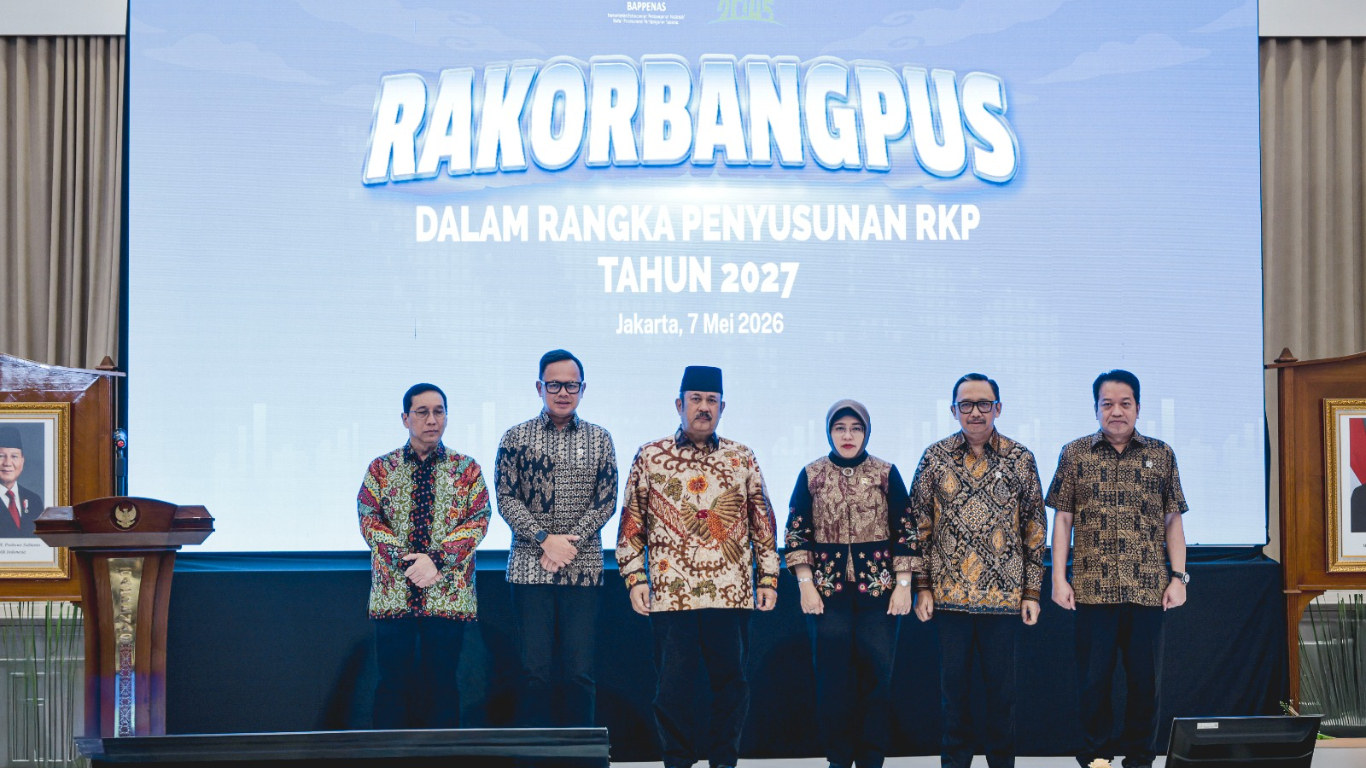
The Ministry of National Development Planning/Bappenas has reaffirmed its commitment to strengthening the synchronisation of development planning and budgeting between central and regional governments to support the achievement of national development targets. The Government has set an economic growth target of 5.9–7.5 per cent in the 2027 Government Work Plan (RKP) to maintain momentum towards achieving eight per cent economic growth by 2029.
The 2027 RKP adopts the theme “Accelerating Quality Growth through Productivity, Investment, and Industry” as the Government’s strategic approach to promoting inclusive and sustainable economic growth. This theme is aligned with the budgeting focus of achieving higher growth and faster prosperity, with the ultimate objective of delivering quality growth.
The Minister for National Development Planning/Head of Bappenas Rachmat Pambudy stated that the 2027 RKP has been formulated to ensure that development is implemented more concretely and delivers tangible benefits to the public.
“Planning must be prepared with both optimism and realism. This ambition will be accompanied by measurable steps towards a single objective: growth that promotes welfare, is equitable, and is genuinely felt by all Indonesians,” Minister Rachmat stated during the Central Development Coordination Meeting (Rakorbangpus) for the preparation of the 2027 RKP at the Bappenas Office, Jakarta, on Thursday, 7 May 2026.
The 2027 RKP carries a transformative spirit by ensuring that development is implemented through focused and impactful programmes capable of responding to economic challenges and opportunities amid global uncertainty. This transformation is reflected in the implementation of eight clusters under the National Priority Work Programme (PKPN), in accordance with the President’s directives delivered during the 8 April 2026 briefing.
The eight clusters cover food sovereignty; energy and water self-sufficiency; education; health; poverty reduction; downstreaming and industrialisation; infrastructure, housing, and disaster resilience; as well as people-centred and village economies. Through the PKPN, cross-sector development interventions are expected to become more integrated, serving as drivers of growth while making tangible contributions to equitable development and improved public welfare.
“We are positioning the 2027 RKP as an instrument to ensure that these development priorities are genuinely achieved on the ground, with greater focus and stronger impact,” Minister Rachmat added.
On the same occasion, Secretary of the Ministry of National Development Planning/Principal Secretary of Bappenas Teni Widuriyanti stated that Rakorbangpus serves as an important forum for strengthening development integration. Implementation of the 2027 RKP will also be supported by a comprehensive development financing strategy, sourced not only from the State Budget (APBN), but also reinforced through investment contributions from state-owned enterprises, the private sector, and various non-APBN financing sources to ensure the successful delivery of government priority programmes.
Head of Statistics Indonesia (BPS) Amalia Adininggar Widyasanti, Vice Minister of Finance Juda Agung, and Vice Minister of Home Affairs Bima Arya Sugiarto were also present to discuss strengthened statistical data, fiscal policy direction, and synchronisation between central and regional development to support the effective implementation of the 2027 RKP.
The Ministry of National Development Planning/Bappenas encouraged all stakeholders to jointly accelerate appropriate programme measures, implement programmes in an integrated manner, and establish strong coordination to support the achievement of growth towards eight per cent, accompanied by poverty reduction and job creation.
This annual event was attended by representatives from 110 ministries/agencies and 38 regional governments, represented by regional development planning agencies (Bappeda), both in person and virtually.
Minister Rachmat underscored the importance of ensuring that every development plan is translated into concrete implementation through synergy among all stakeholders.
“Development must not stop at planning, but must produce visible results,” the Minister concluded