


Government Opens Space for Collaboration, Strengthening Philanthropy Governance in Indonesia
Development News - Mon, 18 May 2026
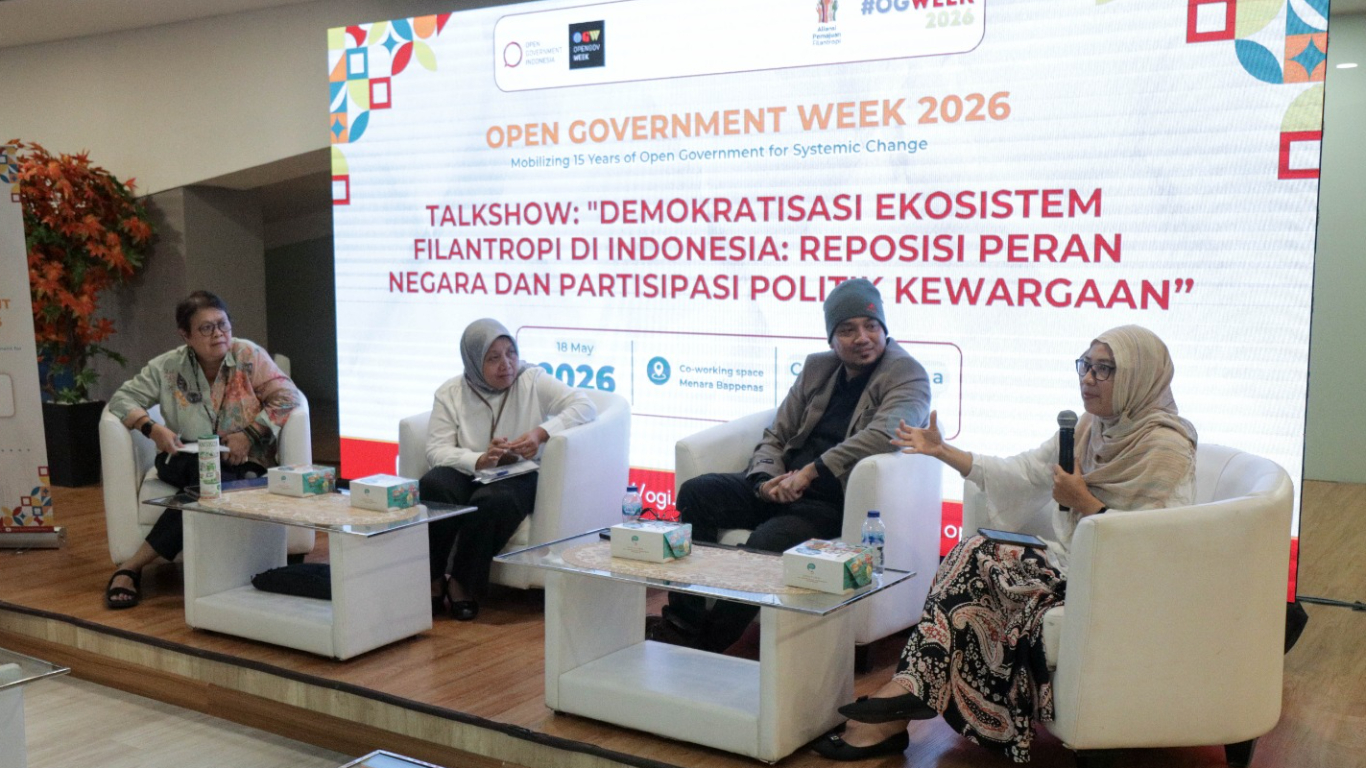
The Ministry of National Development Planning/Bappenas, through the National Secretariat of Open Government Indonesia, held a discussion entitled “Democratising the Philanthropy Ecosystem in Indonesia: Repositioning the Role of the State and Civic Political Participation” as part of the Open Government Week series held from 18–22 May 2026.
The discussion served as a platform for dialogue between the government, civil society organisations, and philanthropic institutions to discuss strengthening regulations that better support philanthropy governance in Indonesia.
The Director of Social and Economic Self-Reliance at the Ministry of National Development Planning/Bappenas Dinar Dana Kharisma emphasised that Indonesia’s philanthropic potential is enormous and needs to be optimised as one of the sources of development financing.
“Government resources alone will not be sufficient to address all development challenges. Therefore, participation from various parties, including philanthropic institutions and the public, is required. This is in line with efforts to enhance the role and visibility of philanthropy so that it becomes part of national development planning,” Director Dinar stated at the Bappenas Tower in Jakarta on Monday, 18 May.
Meanwhile, Acting Deputy for the Coordination of Social Welfare Improvement at the Coordinating Ministry for Community Empowerment Dyah Tri Kumolosari stressed the importance of building stronger collaboration mechanisms between the government and non-governmental institutions. According to her, the government not only acts as a regulator, but also as an enabler that encourages the growth of a healthy and participatory philanthropy ecosystem.
The discussion also highlighted the importance of creating a more open and in-depth dialogue space between the government and philanthropic institutions in order to directly hear the various challenges faced in the field. Several areas requiring further improvement include licensing processes that are still considered burdensome, regulatory requirements that have not fully adapted to technological developments, and the need to strengthen oversight in the distribution of donation funds to ensure accountability and accurate targeting.
In closing the discussion, Director Dinar stated that philanthropy regulations are expected to become more enabling in nature, no longer solely oriented towards control, but also encouraging approaches focused on guidance, assistance, and capacity building. “Going forward, the government will encourage the formulation of philanthropy regulations that not only provide protection, but also make it easier for the public to contribute. This step is expected to create a stronger and more conducive philanthropy ecosystem, thereby increasing public participation in national development,” Director Dinar affirmed.