


Govt Targets 3 Million Homes Built for Low-Income Communities
Prime News - Wed, 05 February 2025
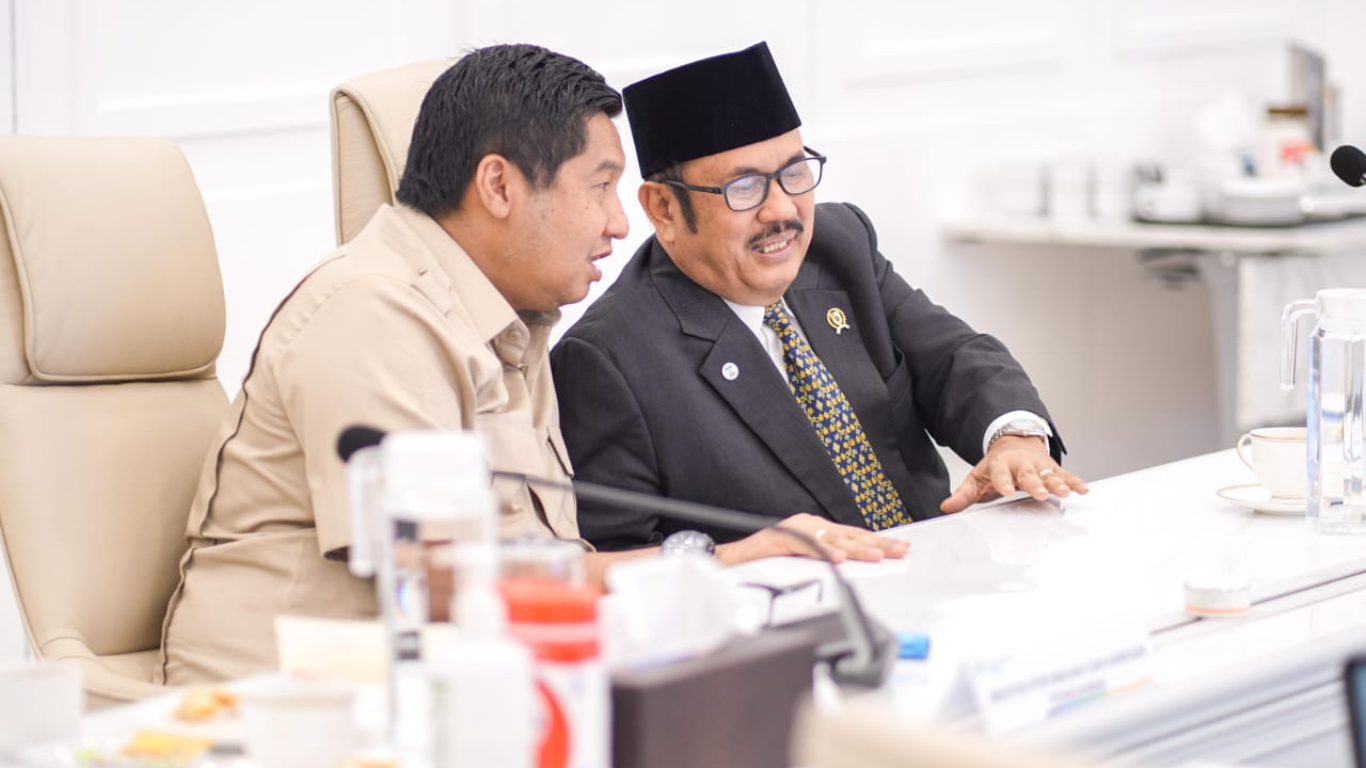
The Ministry of National Development Planning/Bappenas, in collaboration with the Ministry of Housing and Residential Areas, continues to strengthen strategies for providing housing for Low-Income Communities (MBR).
During a coordination meeting with the Minister of Housing and Residential Areas, Maruarar Sirait, and Acting Head of the Central Bureau of Statistics (BPS), Amalia Adininggar Widyasanti, the government reaffirmed its commitment to achieving the target of constructing 3 million homes during the 2025–2045 period. This target comprises 2 million units in rural areas and 1 million units in urban areas.
"Housing development is not just about providing shelter, but also ensuring that people have access to decent, affordable, and quality housing to improve their well-being," said the Minister of National Development Planning/Head of Bappenas, Rachmat Pambudy.
The government is striving to enhance access to decent and affordable housing for MBR by utilizing data from the Social and Economic Registration (Regsosek) and developing a housing queue system to ensure that beneficiaries are accurately targeted. This system will include information on housing preferences, purchasing power, and housing demand—whether for ownership, rental, or rent-to-own schemes. To support the sustainability of this program, a revision of Law No. 23/2014 on Regional Governments is necessary to expand the authority of local governments in implementing housing programs for MBR.
Currently, the regulation limits the role of local governments, even though they have a better understanding of their region’s housing needs. The government is also promoting matching programs, such as the "Tuku Lemah Oleh Omah" initiative implemented in Central Java.
The 3-million-home program is projected to have a significant impact on national economic growth. With an investment value reaching IDR 412.50 trillion, the program is expected to boost economic growth by up to 1.68 percent and create employment opportunities for 380,000 people. Additionally, the government is working to strengthen the housing ecosystem through the development of investment-based savings and the securitization of housing finance assets. Self-help housing finance schemes in rural areas will be expanded, while urban housing development will adopt the Transit-Oriented Development concept and consider urban renewal strategies.
"Housing provision is not the sole responsibility of one party; it requires synergy between the central government, local governments, the private sector, and the community. With the strategies that have been designed, the 3-million-home program is expected to make a tangible impact on improving people's well-being and accelerating the achievement of the Sustainable Development Goals (SDGs)," concluded Minister Rachmat.