


Bappenas Wins Two 2025 BAZNAS Awards, Reinforces Commitment to Strengthening the National Zakat Ecosystem
Development News - Thu, 28 August 2025
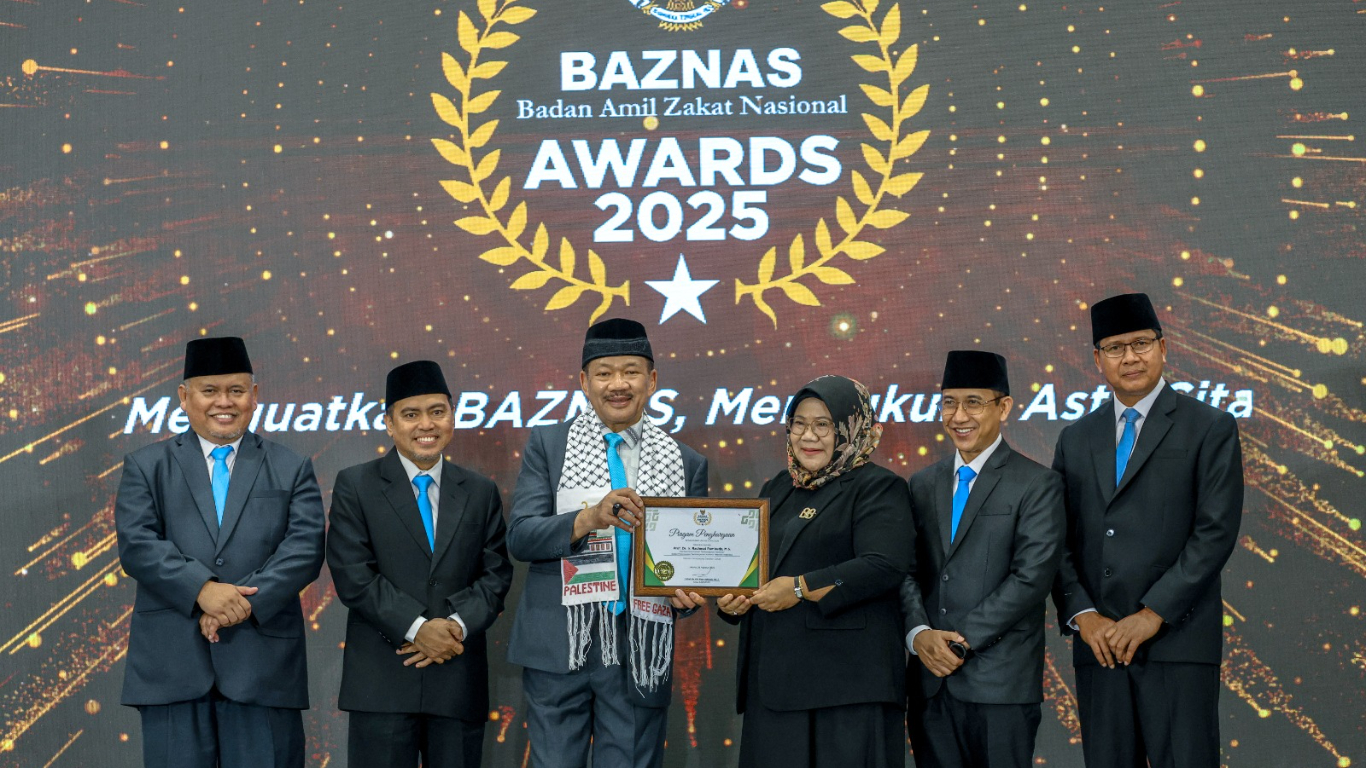
The Ministry of National Development Planning/Bappenas received two awards at the 2025 BAZNAS Awards: the 2025 Special Award for the Minister of National Development Planning/Head of Bappenas as “Minister Supporting the Zakat Movement,” and the “Best Partner” category for Bappenas as an “Institution Supporting the Zakat Ecosystem for Community Welfare.”
“As a Zakat Collection Unit, Bappenas not only sets an example through staff zakat contributions but also ensures zakat indicators are integrated into the National and Regional Medium-Term Development Plans (RPJMN and RPJMD),” said Bappenas’ Director of Islamic Economics and State-Owned Enterprises, Rosy Wediawaty, on behalf of the Ministry at the 2025 BAZNAS Awards in Jakarta, Thursday (28/8).
This recognition underscores Bappenas’ commitment to strengthening the national zakat ecosystem by aligning policies on Islamic social funds, including zakat, within the 2025-2045 Long-Term National Development Plan and the 2025-2029 Medium-Term National Development Plan. Bappenas has also overseen the inclusion of the National Zakat Index (IZN) as one of the outcome indicators for regional development within the Regional Government Information System (SIPD), enabling local governments to incorporate zakat indicators in their Regional Medium-Term Development Plans.
Since 2019, Bappenas has operated a Zakat Collection Unit (UPZ) that gathers Zakat, Infaq, Sadaqah, and Other Religious Social Funds (ZIS-DSKL) from its staff. Between August 2022 and August 2025, a total of IDR 249 million was collected from 34 zakat contributors (muzakki). This effort supports the target to raise the zakat-to-GDP ratio as outlined in the 2025–2029 RPJMN. Director Rosy also highlighted the importance of transparency and digitalization in zakat governance. “The public must know how much is paid and where it is distributed. With digitalization, public trust in zakat can continue to grow,” she explained.
These two awards serve as motivation for Bappenas to keep collaborating with stakeholders in strengthening zakat’s role, not only as a philanthropic instrument but also as a pillar of inclusive economic development.
“Without collective support, zakat targets would be impossible to achieve. If optimized, zakat will become a powerful force for poverty alleviation, human capital development, and regional economic growth,” concluded Rosy.