


Indonesia Promotes Multisector Collaboration for Human Capital Development Through MBG Program at HLPF 2025
Prime News - Thu, 24 July 2025
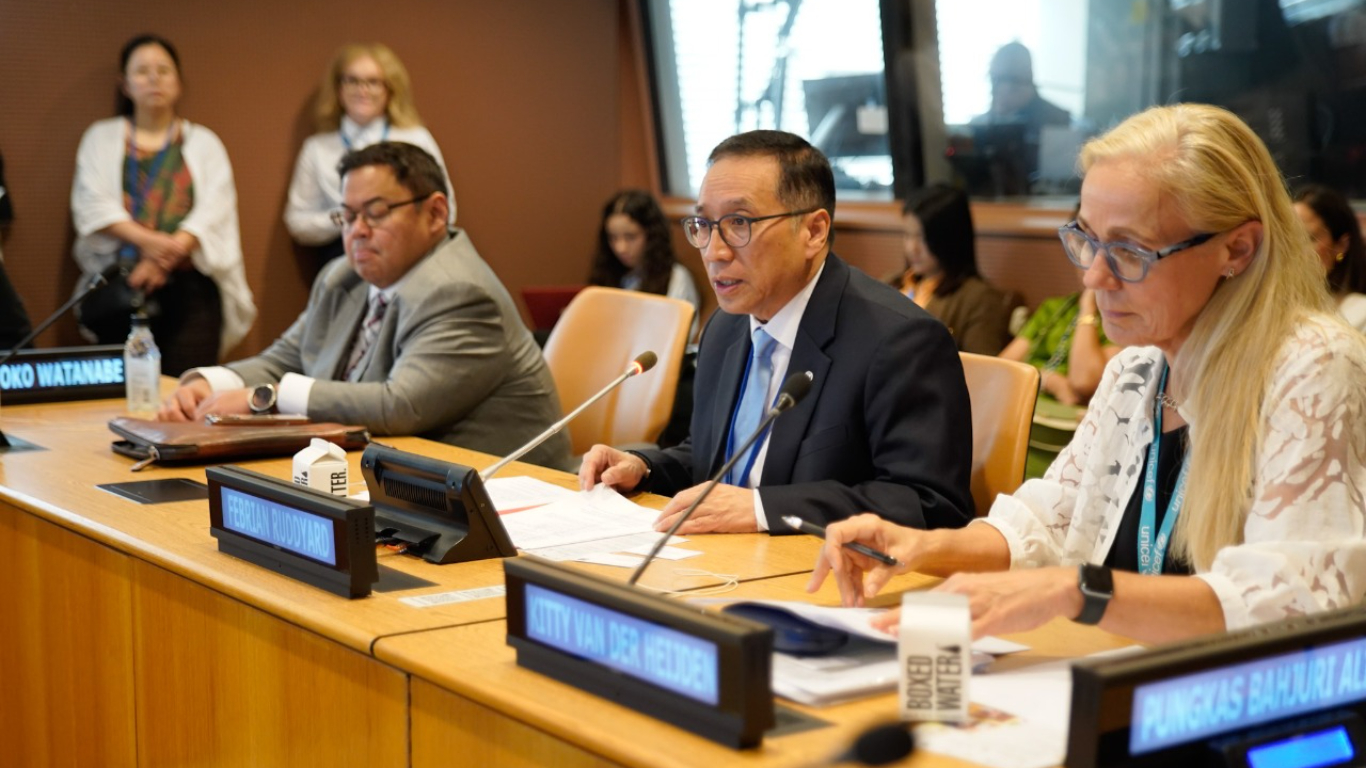
NEW YORK – The Government of Indonesia, through the Ministry of National Development Planning/Bappenas, reiterated its commitment to strengthen and create more competitive human capital.
This commitment is shown through the ongoing national Free Nutritious Meals (MBG) program, which was explained during a side event titled “Feeding the Future: Leveraging Multisectoral Efforts for Productive Human Capital and Engaging Women’s Participation,” held alongside the 2025 High-Level Political Forum (HLPF) at the United Nations Headquarters in New York on Wednesday, 23 July.
Held in Conference Room 9 at UNHQ New York, the event was jointly organized by the governments of Indonesia, Qatar, Finland, Bulgaria, and Japan, with support from UNICEF and the Asian Development Bank (ADB). This side event served as a strategic forum to exchange best practices, address challenges, and explore multisector approaches to ensuring the success of nutritious meal programs as a long-term investment in human development.
Vice Minister for National Development Planning/Vice Head of Bappenas Febrian Alphyanto Ruddyard emphasized that the MBG program is a tangible initiative in support of the Golden Indonesia 2045 Vision. The program provides free nutritious meals to schoolchildren, Islamic boarding school students, pregnant and breastfeeding women, and young children. “This initiative goes beyond food. It addresses issues related to nutrition, health, education, women's empowerment, food security, and poverty reduction. It applies a multisector approach, with Bappenas playing a central role in coordinating policies, budgeting, and monitoring and evaluation,” said Vice Minister Febrian.
The side event featured key speakers from government and development partners, including Principal Secretary of the National Nutrition Agency Brig. Gen. (Ret.) Sarwono, Kathleen Sherwin from Plan International, Dr. Joan Matji from UNICEF, and Mr. Ally-Raza Qureshi from the World Food Programme. Government representatives from Bulgaria, Finland, Qatar, and Italy also contributed as discussants.
In his presentation, Vice Minister Febrian stressed that the success of the MBG program depends on cross-sector collaboration. Key contributors include the health, education, agriculture, food and waste management sectors, community empowerment, as well as basic infrastructure and data systems. Bappenas, in cooperation with the National Nutrition Agency and relevant ministries and agencies, continues to strengthen this inter-sector synergy to ensure the program's sustainability.
This side event also marked an important moment ahead of the Second Global Summit of the School Meals Coalition, which will take place in Fortaleza, Brazil, in September 2025. Indonesia hopes the forum will generate actionable strategies and initiatives to enhance the implementation of nutritious meal programs both nationally and globally.
“We invite all stakeholders to work together in supporting the success of the nutritious meals program as a national strategy for raising a healthy, intelligent, and productive generation, in pursuit of the 2030 Sustainable Development Goals,” concluded the Vice Minister.