


Bappenas Reaffirms Commitment to Supporting MSME Development through SAPA UMKM and Business Card Programme Collaboration
Prime News - Mon, 04 August 2025
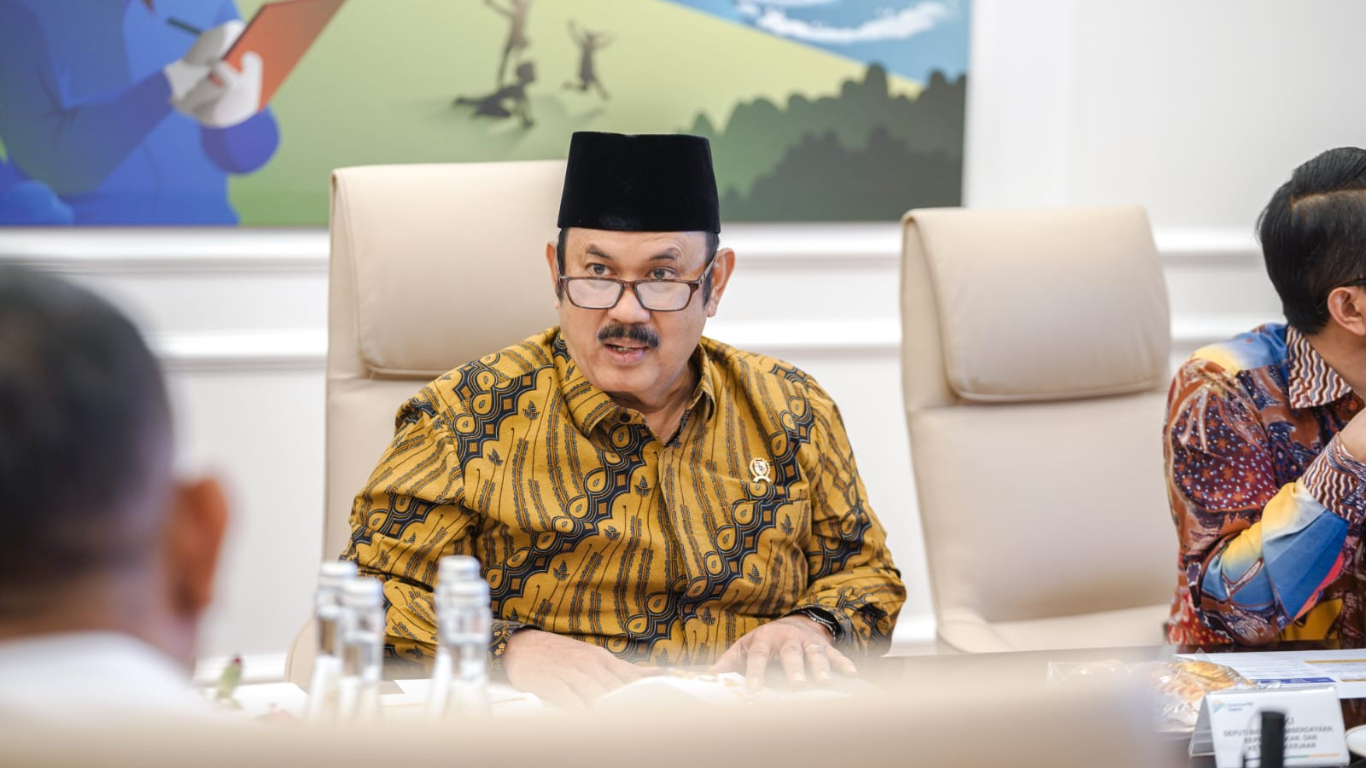
In a meeting with the Minister and Deputy Minister of Micro, Small, and Medium Enterprises (MSMEs), Maman Abdurrahman and Helvi Yuni Moraza, the Minister for National Development Planning/Head of Bappenas Rachmat Pambudy underscored the significance of the SAPA UMKM digital platform and the Business Card Programme as tangible steps to strengthen the empowerment ecosystem for small and medium-sized enterprises in Indonesia.
“We welcome the initiative to enhance MSME data and services through SAPA UMKM. This collaboration lays an important foundation to align various inter-ministerial and agency programmes for more targeted and sustainable outcomes,” stated Minister Rachmat Pambudy on Monday (4/8).
As a National Strategic Project, the Business Card Programme is divided into two schemes: the Affirmative Business Card (KUA) and the Productive Business Card (KUP). The KUA targets the poorest 40% of the population, focusing on skills training, continuous mentoring, and empowering micro-enterprises to become self-sufficient and move beyond reliance on social assistance.
Meanwhile, KUP is aimed at the middle class and aspiring middle class with growth potential, focusing on enhancing competitiveness, improving access to finance, and strengthening entrepreneurial networks.
To ensure effective implementation, four core pillars of governance have been prepared including cross-ministerial standardisation, an integrated information system via SAPA UMKM, execution coordination through a Project Management Office (PMO), and comprehensive and adaptive entrepreneurship regulations.
SAPA UMKM will also be linked to the Unified MSME Data Information System and other digital services such as Online Single Submission (OSS), halal certification, and other empowerment programmes.
This cross-sector collaboration is expected not only to increase MSMEs’ contribution to GDP but also to create quality employment, accelerate digital economic transformation, and realise inclusive and sustainable economic growth.
“National planning must ensure that MSME empowerment policies do not operate in silos. That’s why at Bappenas, we are pushing for a single data system, a unified platform, and a cohesive ecosystem to enable MSMEs to level up in a structured and inclusive manner, making a real contribution to sustainable economic growth,” Minister Rachmat concluded.