


Bappenas & UN Agree on Sustainable Development Cooperation Framework for 2026–2030
Prime News - Wed, 13 August 2025
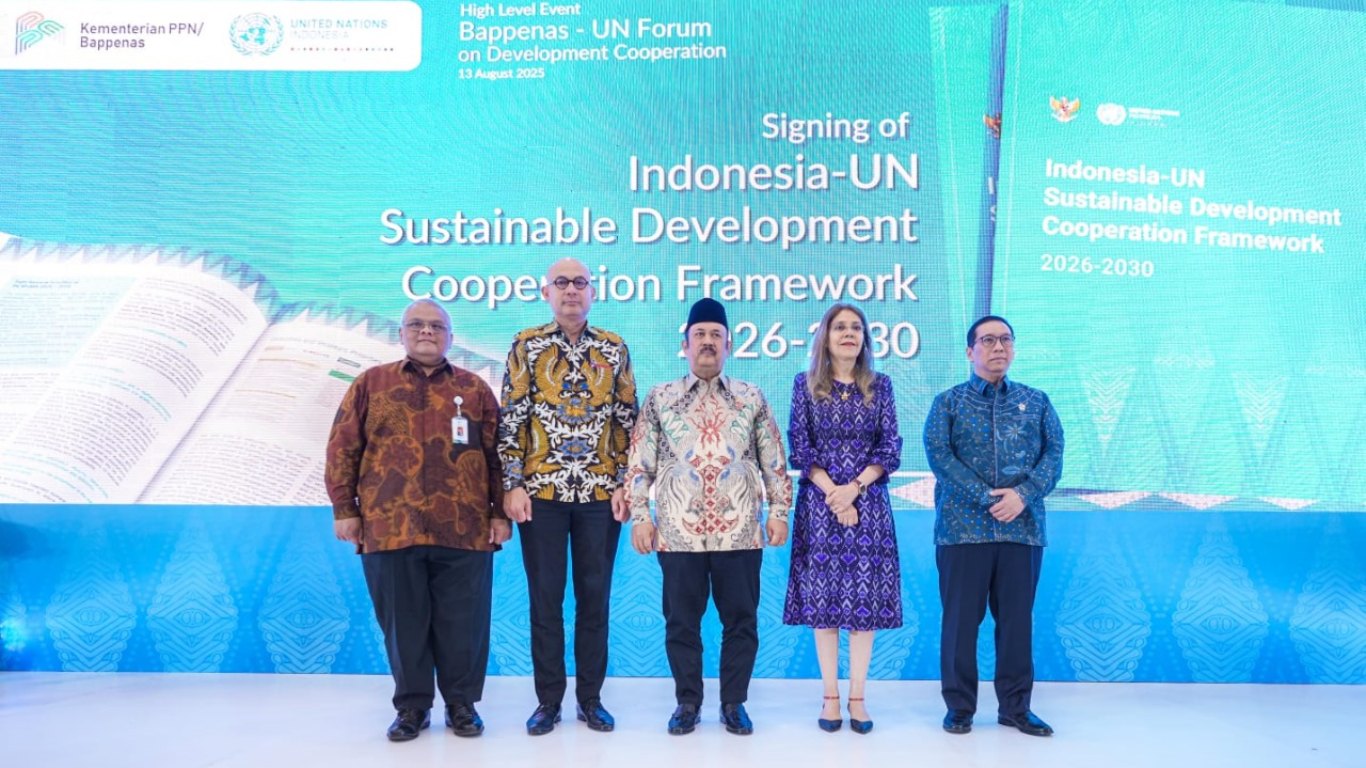
JAKARTA – The Government of Indonesia and the United Nations (UN) launched the 2026-2030 Indonesia–United Nations Sustainable Development Cooperation Framework (UNSDCF) at the Bappenas Building, Jakarta, on Wednesday (13/8).
“For the implementation of the UNSDCF 2026–2030, we must strengthen coordination, build the capacity of local governments and implementing partners, enhance monitoring and evaluation systems, and mobilise resources through innovative financing,” the Minister for National Development Planning/Head of Bappenas Rachmat Pambudy remarked during the framework’s launch.
Aligned with the 2025-2029 National Medium-Term Development Plan (RPJMN) and the 2025-2045 National Long-Term Development Plan (RPJPN), this cooperation framework defines the UN’s contribution in three transformative outcomes: human development, focusing on equal access to healthcare, education, social protection, and nutrition; nature, decarbonisation, and resilience, including support for biodiversity, climate change adaptation, and energy transition; and economic and digital transformation, promoting inclusive economic growth, green job creation, digital innovation, and strengthening data systems.
Meanwhile, the Deputy Minister for National Development Planning/Deputy Head of Bappenas Febrian Alphyanto Ruddyard emphasised the importance of partnerships in this strategic collaboration.
“Achieving the Sustainable Development Goals is not merely a global obligation, but a promise to the people to realise an inclusive, just, and resilient future. The UNSDCF has captured these needs, and this alignment reflects a shared commitment to the SDGs as well as underscores the importance of partnership, mutual respect, and coordinated action,” the Deputy Minister said.
The cooperation framework also outlines the UN’s approach, focusing on bridging development gaps, mobilising large-scale innovative financing, and providing integrated, high-quality policy and technical support.
“Today’s launch should be more than just a milestone. It should serve as a catalyst for fair and sustainable progress for every community across Indonesia,” remarked the Deputy Minister of Foreign Affairs, Arrmanatha Nasir.
UN agencies are currently exploring innovative financing for sustainable development, including the Indonesia SDGs Accelerator Fund and Regional Thematic Bonds. These mechanisms channel development capital specifically to regions requiring special attention.
“By integrating efforts into national programmes and budgets, the UN will deliver large-scale impact to support the President’s ambition of achieving food, energy, and water security, underpinned by high economic growth,” The UN Resident Coordinator in Indonesia Gita Sabharwal said.
“Entering the final five years towards 2030, we face rapidly changing geopolitical challenges. This means the UN can no longer operate as usual, and this new Cooperation Framework envisions a bold shift in roles,” she added.
Developed through consultations with ministries/agencies, government bodies, civil society organisations, the private sector, youth groups, and development partners, this cooperation document serves as a work foundation for 22 UN agencies active in Indonesia to ensure coherence, efficiency, and significant support for national development.