


Bappenas & Imipas Support Food Security and Economic Independence through Coconut Downstreaming
Partnership News - Mon, 15 September 2025
JAKARTA – In line with the mandate of the 2025-2045 National Long-Term Development Plan (RPJPN) and the 2025-2029 National Medium-Term Development Plan (RPJMN), coconut downstreaming has been designated as one of the National Strategic Projects (PSN) to strengthen food security and economic independence.
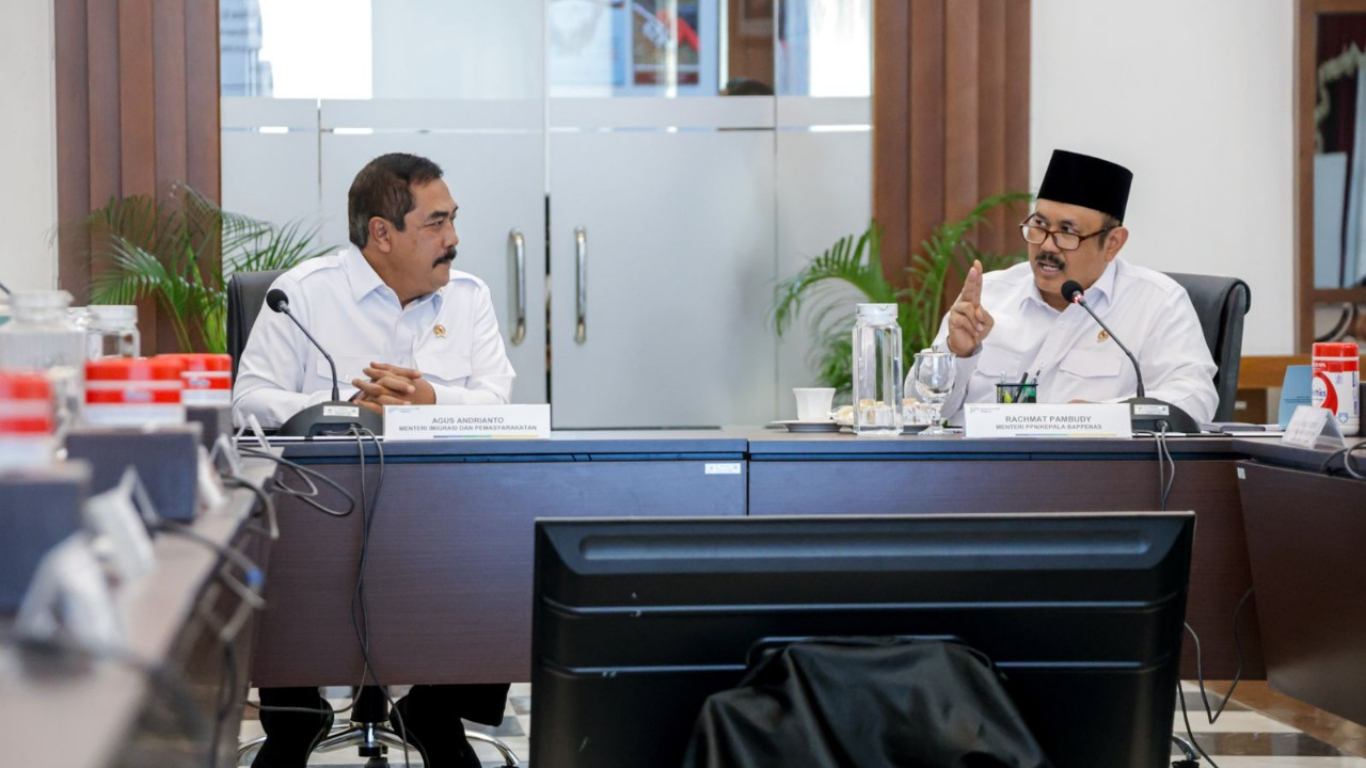
“By including coconut downstreaming in the National Strategic Projects, we can foster investment, boost productivity, increase added value, and expand job opportunities. This marks the beginning of a process where we can build from within our own foundations,” said the Minister of National Development Planning/Head of Bappenas, Rachmat Pambudy, at the Coordination Meeting of the Planning and Acceleration Team for the Coconut Downstreaming Programme, held at the Bappenas building, Jakarta, Monday (15 September).
As the world’s largest coconut producer, contributing 24 percent of global copra-equivalent coconut production, Indonesia continues to face challenges in its coconut industry. These include low productivity, limited diversification of processed products, suboptimal fulfilment of domestic demand, and the absence of an integrated supporting ecosystem.
To address these issues, Bappenas and the Ministry of Immigration and Correctional Affairs signed a Memorandum of Understanding on Optimisation and Synergy in the Implementation of Duties and Functions in National Development Planning as well as Immigration and Correctional Development.
This agreement reinforces the implementation of the 2025-2045 Coconut Downstreaming Roadmap, which serves as a guiding document to build a sustainable, inclusive, and competitive coconut sector that supports farmer welfare, industrial growth, and national economic resilience.
Bappenas has established the Planning and Acceleration Team for the Coconut Downstreaming Programme, tasked with coordinating the preparation of strategic work plans, facilitating investment entry, and formulating policy recommendations to ensure alignment among all stakeholders. The initiative also includes empowering Vocational Training Centres and Correctional Inmates.
This synergy is expected to ensure that coconut downstreaming is implemented inclusively and sustainably, while strengthening economic independence and delivering broad social benefits, such as the Nationwide Coconut Tree Planting Movement and the export of coir products crafted by inmates of Garut Correctional Facility.
“Indonesia is the world’s leading coconut producer. From coconuts, Indonesia once rose and earned substantial foreign exchange. This is a small step towards a giant leap. Through this collaboration, we are making new history, not relying solely on palm oil, but also elevating coconut, which has long been our source of oil,” concluded Minister Rachmat.