


Bappenas and BPJS Kesehatan Discuss Strengthening Sustainability of the National Health Insurance Program
Prime News - Mon, 16 March 2026
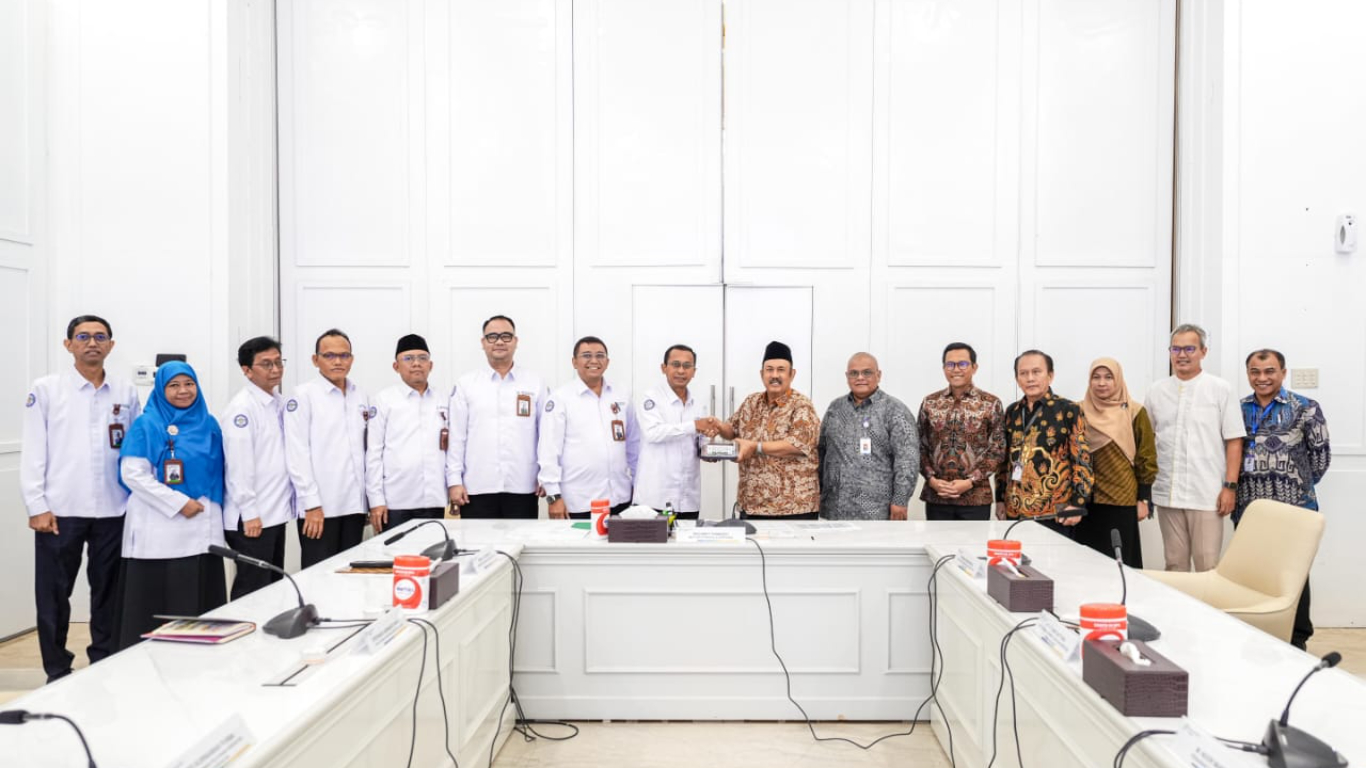
JAKARTA – The Minister for National Development Planning/Head of Bappenas Rachmat Pambudy received the President Director of BPJS Kesehatan Prihati Pujowaskito along with the board of directors of BPJS Kesehatan in a meeting discussing efforts to strengthen the sustainability of the National Health Insurance (JKN) programme.
The meeting formed part of ongoing efforts to strengthen coordination between Bappenas and BPJS Kesehatan in improving the effectiveness of Indonesia’s health insurance system.
Cooperation between Bappenas and BPJS Kesehatan has been established through a cooperation agreement signed in September 2025, which continues to serve as the basis for coordination in data utilisation and the strengthening of JKN policies.
In his remarks, Minister Rachmat emphasised that health is a fundamental right of citizens and a key foundation for national productivity.
“Our society is facing a difficult situation. The inadequacy of health insurance and various other challenges are fundamentally related to the state’s basic obligations. The government must ensure that the fundamental rights of the people are fulfilled. The right to be healthy is a right. Our obligation is to ensure people are healthy,” said Minister Rachmat.
He added that public health is directly linked to national productivity and development outcomes.
“Why must every country be healthy? Because health is a source of productivity. Healthy people are productive, while those who are ill will inevitably experience a decline in productivity. If a country’s productivity declines, it will not be able to achieve optimal development conditions. Therefore, the social health security administering body is one of the institutions that we must pay serious attention to,” he explained.
During the meeting, BPJS Kesehatan President Director Prihati Pujowaskito outlined the latest developments in the implementation of the JKN programme, including the continuously expanding participant coverage.
“Membership has reached around 283 million people, with approximately 81 per cent of participants actively enrolled. The level of activity is also very high. In a single day, we can handle around two million healthcare service transactions,” said Prihati.
However, she acknowledged that the sustainability of programme financing remains a challenge that must be anticipated.
“If we look at the financing side, our monthly expenditure is around IDR 16 trillion, while our revenue is still approximately IDR 2 trillion lower. This is certainly a challenge that we must address moving forward through various improvement measures,” she explained.
Prihati also conveyed that BPJS Kesehatan is preparing several strategic initiatives to strengthen services and ensure programme sustainability, including through service approaches that are more focused on participants’ needs and the strengthening of technological systems.
In response, Minister Rachmat highlighted structural challenges within the health insurance system, particularly the mismatch between contribution revenues and healthcare service expenditures.
“There is a financial issue here because there is a mismatch between contributions and the management of claims, which are quite substantial. If this is left unaddressed, the problem will never be resolved. However, I am pleased that you already understand the problem. When someone understands the problem, at least they already know the direction of the solution,” he said.
Closing the meeting, Minister Rachmat encouraged the board of directors of BPJS Kesehatan to strengthen teamwork and leadership by setting a strong example in carrying out their responsibilities, so that the various challenges facing Indonesia’s national health insurance system can be addressed gradually