


Bappenas, ANRI & Cooperatives Ministry Integrate Planning Archives into Satu Data Indonesia for National Development Planning
Prime News - Tue, 25 November 2025
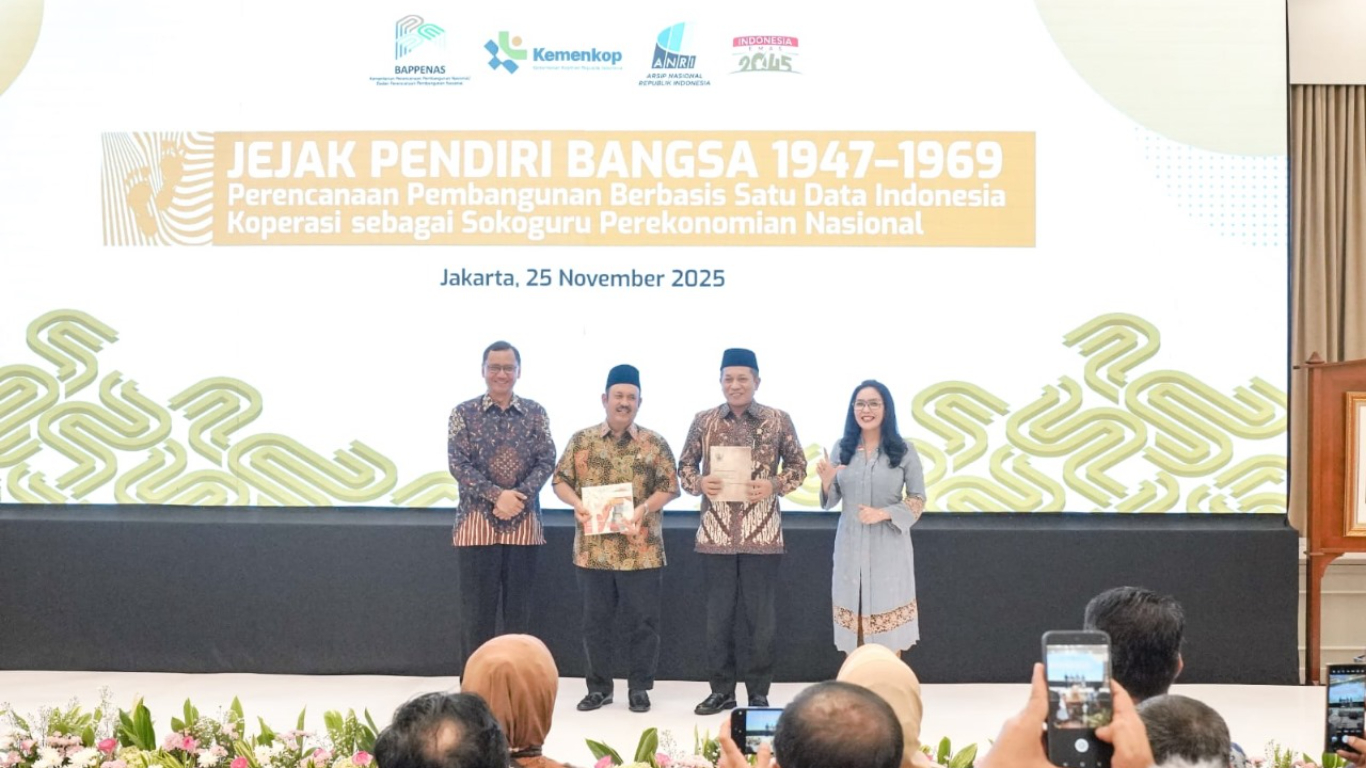
The Ministry of National Development Planning/Bappenas, together with the National Archives of the Republic of Indonesia (ANRI) and the Ministry of Cooperatives, is committed to strengthening the historical role of national development planning as the nation’s collective memory through the launch of two coffee-table books: Designing Indonesia: Tracing National Planning 1947–1969, symbolising the reinforced utilisation of archival materials for visionary development planning, and Indonesian Cooperatives: People's Enterprises Building the Nation.
“History repeats itself; without records, we do not know where to go. With archives, we know the direction ahead and we avoid what is often referred to as reinventing the wheel,” explained the Minister for National Development Planning/Head of Bappenas, Rachmat Pambudy, at the Founders’ Footsteps 1947–1969: Development Planning Based on Satu Data with Cooperatives as the Pillar of the National Economy event at Bappenas, Jakarta, Tuesday (25/11).
National development planning has been underway since Indonesia’s independence, beginning with foundational development blueprints such as the 1947 Basic Principles of Indonesia’s Economic Planning, the 1956–1960 State Policy Guidelines (GBHN), the National Comprehensive Planned Development Pattern (PPNSB), and the National Development Programme (Propenas), which became the precursor to the National Long-Term Development Plan. From these monumental legacy documents, the Ministry of National Development Planning/Bappenas received an ANRI award for the designation of the National Planning Council (Depernas) archives and the PPNSB archives as part of the Nation’s Collective Memory. The intellectual assets preserved and safeguarded at Bappenas were recognised by the Expert Council on the Nation’s Collective Memory as archives of high historical significance for Indonesian civilisation.
Archives are not merely administrative records, but the nation’s collective memory as heritage passed from one generation to the next. “Today’s event is designed to reframe and reconnect the journey of national planning from the early years of independence to the modern planning system we are now developing, through strengthened innovation, strengthened data, and strengthened people’s economic actors. Elements that together contribute to development, especially through one of the pillars that is currently also a key government programme: cooperative development,” said Secretary of the Ministry of National Development Planning/Principal Secretary of Bappenas, Teni Widuriyanti.
On this occasion, Minister Rachmat Pambudy also officiated the opening of the First Development Roadmap of the Republic of Indonesia 1960–1969 as a tangible expression of accurate, data-based development formulation.
The Ministry of National Development Planning/Bappenas remains fully committed to integrating the legacy of historical values with digital innovation, producing development planning that addresses root problems and delivers real benefits for the people. “With Satu Data Indonesia as the foundation of planning, with cooperatives as the pillar of the people’s economy, and with cross-institutional synergy such as what we witnessed today, we continue the great aspirations of the founders of the nation with far stronger tools,” concluded Minister Rachmat.